
Robotic Gait Assisted Device
 Witthaya Duangnga: Head of Rehabilitation Medicine and Physical Therapy Department
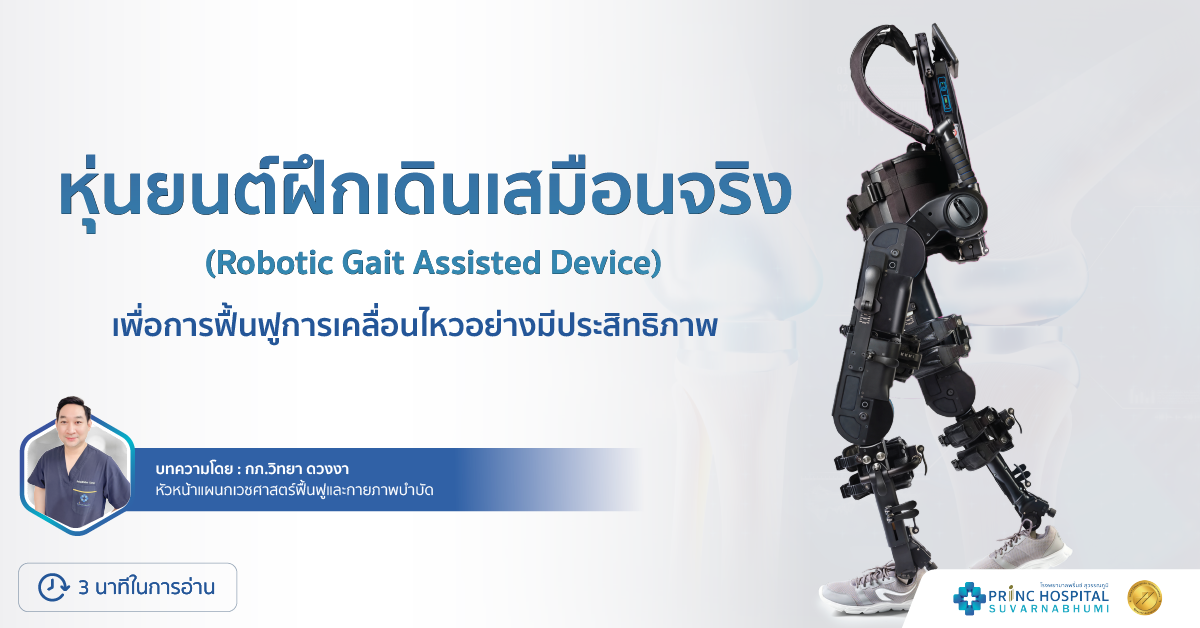
The human body has a neural network known as the Central Pattern Generator (CPG), which plays a role in recognizing repetitive movement patterns, including walking. Therefore, repetitive walking training using a robotic gait assisted device can stimulate the nervous system and muscles, allowing the patient to improve walking. This process helps the patient in the rehabilitation of their movement abilities.
Robotic Gait Assisted Device
The Robotic Gait Assisted Device is a robotic device designed to assist with realistic gait training for patients who have difficulties walking or maintaining balance. This device utilizes advanced technology such as sensors and control software to help patients practice walking in a correct and safely. Robotic gait rehabilitation helps enhance the effectiveness of treatment and reduces the time needed for patients to recover physically.
The Working of a Robotic Gait Assisted Device
- The working of a robotic gait assisted device operates with a computer system that helps design movements suitable for each individual.
- It can adjust walking patterns, set walking speed, and choose from various walking styles, including walking on flat surfaces, slopes, or stairs.
- It helps individuals practice walking for longer periods, help the brain to remember, and accelerates rehabilitation or physical therapy for walking recovery.
Benefits of the Robotic Gait Assisted Device
- Rehabilitation of Walking Ability
For patients with walking difficulties due to stroke, spinal cord injuries, or neurological disorders, the robotic helps in effective rehabilitation. It enables the brain to learn through repetitive training, making walking practice faster, as the robot can adjust movements based on the patient’s abilities.
- Reduction in Rehabilitation Time
Using the robot shortens rehabilitation time by providing precise and continuous walking practice. This helps patients walk consistently, improves muscle endurance, and allows them to walk longer distances.
- Accuracy and Consistency in Training
The robot works with high accuracy and consistency, enhancing the effectiveness of training and reducing the risk of improper practices. It can be used for gait training both in hospitals and at home.
- Customizable Training for Each Individual
The robot offers various training forms such as gait patterns and weight distribution, and it can adjust walking speed and movement style according to each patient’s specific needs, improving the training's effectiveness.
- Increased Safety
The robot has sensors that detect abnormal movements and adjust accordingly, reducing the risk of injury during training.
- Restore Normal Walking Ability
It helps patients regain walking abilities close to normal, enhancing their quality of life and accelerating their recovery.
Steps for Rehabilitation with Robotic Gait Assisted Device
- Initial Patient Assessment
Doctors and physical therapists assess the patient’s physical condition, including reviewing the medical history and current walking abilities. This includes testing muscle strength, balance, and mobility.
- Rehabilitation Planning
The medical team, including physical therapists, collaborates to develop a rehabilitation plan, setting walking training goals and determining the appropriate duration of therapy based on the patient’s abilities and physical condition.
- Setting Up the Robotic Gait Assisted Device
The physical therapist adjusts the robot to suit each patient, including calibrating resistance levels and movement patterns of the robot.
- Walking Training with the Robotic Gait Assisted Device
The patient begins gait training with the robot under the supervision of the physical therapist, ensuring proper and safe training.
- Monitoring Progress and Adjusting the Training Program
The medical team monitors the patient’s progress and adjusts the training program as needed, such as increasing the difficulty of the exercises, to continuously help the patient develop their walking skills.
Who Should Use the Robotic Gait Assisted Device?
The Robotic Gait Assisted Device is beneficial for rehabilitation and support for various patient groups, especially those who have walking or balance issues due to various causes, such as:
- Stroke Patients
- Spinal Cord Injury Patients
- Balance Disorders such as Parkinson's Disease Patients
- Muscle Weakness
- Post-Surgical Patients
- Neurological Disorders
- Elderly Patients with Mobility Issues
- Patients with Gait Deficit
Precautions
- Skin Abrasions or Redness from Pressure Points
- Risk of Low Blood Pressure
- Dizziness, Lightheadedness, or Fainting
- Muscle Soreness
"If you have any questions or need more information about treatment, please consult a qualified doctor for accurate advice."
Click to Request Consultation
Related Medical Center

Rehabilitation Department
Location
อาคาร B ชั้น 2
Time
จันทร์ - อาทิตย์ 08.00 -17.00
Telephone
02 080 5999 ต่อ 1302
แพ็กเกจ/โปรโมชั่นที่เกี่ยวข้อง


